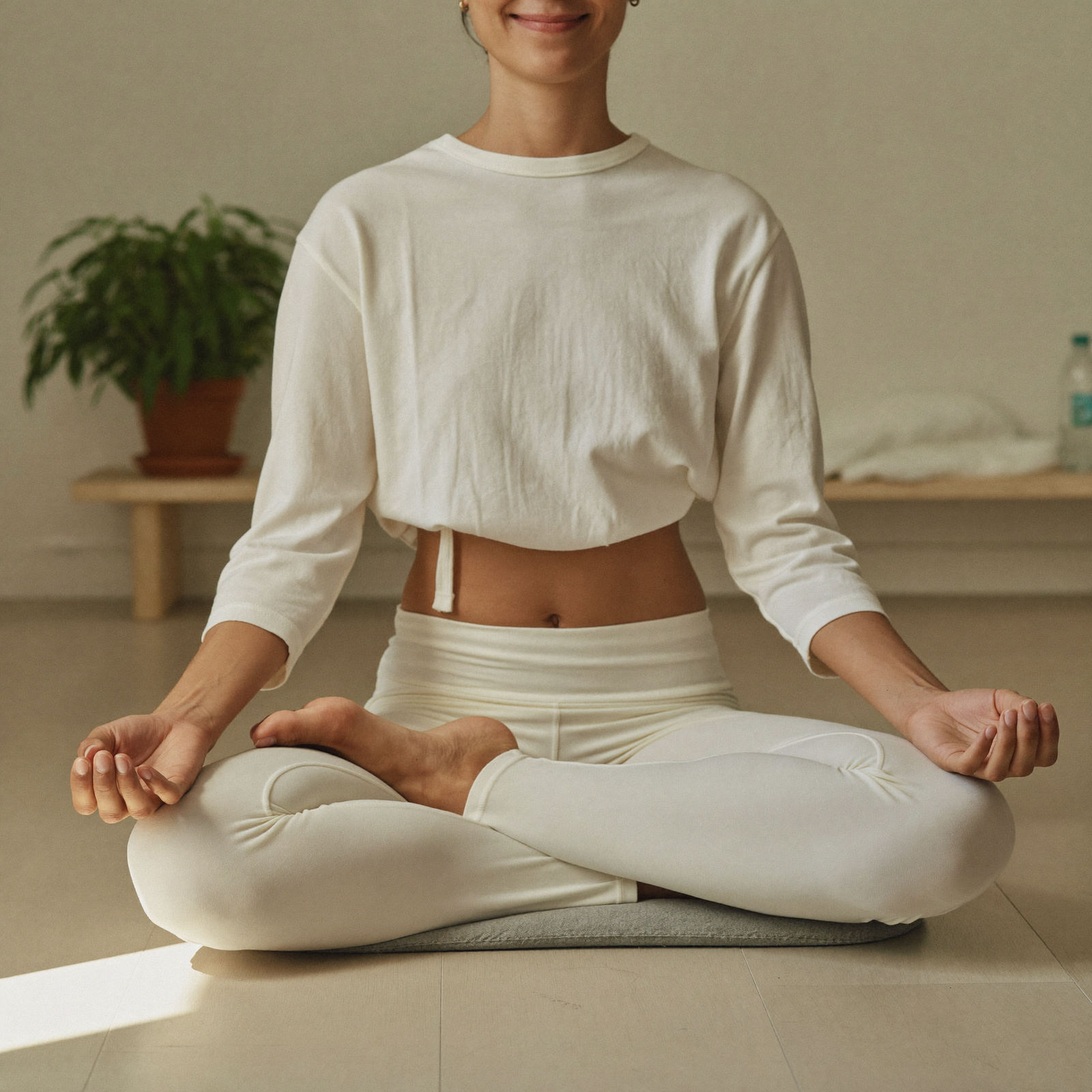
Deep meditation is all about building inner calm, awareness and concentration through steady practice. When you train your attention again and again, your mind becomes easier to settle, and you’re more responsive to what’s happening right now.
In this guide, you’ll pick up practical steps you can try straight away. You’ll also learn how to start small, focus on your breathing, practise mindfulness, and gently let go of expectations without forcing silence.
Create a quiet space to begin your deep meditation practice
Choose a peaceful environment that’s free from noise and distractions. It helps if you can sit without being interrupted, even if it’s only for a short while. Try to create a comfortable centre where you can settle in and relax your shoulders.
If you can, keep the space consistent. When you meditate in the same place, your routine feels more natural, which supports discipline. Clear away clutter that might pull your attention off what you’re doing.
You might also add a few calm cues to help you switch into the right mindset. Simple things, like a specific cushion or a calming colour, can tell your mind it’s time to slow down and focus.
Establish a routine to build consistency
Pick a time of day you can realistically manage, and meditate then each day. Doing it at the same time helps you build consistency. It also makes it easier to start. Treat it as a regular practice, not something you only do when you happen to feel like it.
Use a simple cue or trigger to remind you to begin. For example, you might meditate after you’ve finished making a cup of tea, or once you’ve put your phone on charge. A small routine like this supports your attention from the moment you sit down.
And it’s absolutely fine to be flexible. On busier days, you can keep your session shorter, gentler and kinder to yourself. If you organise your time realistically, you’re more likely to keep going.
Start small and gradually extend your sessions
Begin with 5–10 minutes. Starting small isn’t a step back. It’s a sensible way to build trust in yourself. When you feel comfortable, you can extend the session little by little.
Honour your current capacity instead of pushing yourself to progress faster than you’re ready for. If you aim for too much too soon, you’re likely to feel frustrated, and that makes practice harder. A steady approach supports your behaviour and helps your mind settle more naturally.
After each session, take a moment to notice how you feel. You’re not aiming for perfection. You’re learning, and a quick check-in helps you analyse what works best for you.
Focus on breathing and posture to centre your attention
Breathing is a reliable anchor. Notice your natural breath as it comes and goes, and let it guide your awareness back to the present moment. You don’t need to control your breathing. Simply noticing it helps you stay grounded.
Maintain good posture so your body supports your mind. Sit comfortably with your back upright and your shoulders relaxed. If you find yourself tensing up, gently ease your posture and let your breathing become smoother.
When distractions come up, bring your focus back calmly. You’re training attention, so it’s normal for your mind to wander. Instead of fighting it, guide yourself back to the breath again and again.
You can also practise body scanning. Slowly notice sensations from head to toe, releasing unnecessary tension as you go. This can help you realise where you’re holding stress, even when you didn’t notice it before.
Practise mindfulness, mantras and guided meditation to support concentration
Mindfulness means noticing thoughts and emotions without judgement or getting attached to them. When a thought appears, you notice it, then return your attention to what you’re focusing on. This helps you build awareness without getting pulled into every mental story.
Guided meditation can be a helpful support, especially at the start. Listening to a calm voice and following prompts can improve concentration and awareness. It also gives you structure on days when your attention drifts more easily.
A mantra is another tool you can try. Silently repeat a calming word or phrase to help you stay focused. Think of it as a gentle thread, bringing you back when your mind wanders.
And remember, returning your attention is part of the practice, not a failure. You’re learning how valuable it is to come back gently. Over time, guided sessions and mantras can help you notice your focus settling with less effort.
Let go of expectations and cultivate patient, present practice
One of the biggest obstacles is trying to force your mind to go completely silent. Deep meditation isn’t about making thoughts disappear. It’s about staying aware and present while thoughts come and go.
When your attention wanders, gently bring it back. You might return to your breath, your mantra, or your body sensations. This steady returning helps you build patience and learn how concentration develops naturally.
Deep meditation grows with consistency. You’re training yourself to be present, not chasing extraordinary experiences. Centre your effort on being here now, and practise regular mindful minutes that support your mental wellbeing.
Conclusion
Deep meditation develops through patience, consistency and self-awareness. When you follow these steps, you can build a calmer, more focused mind without needing special conditions or dramatic results.
If you want a simple start, keep a brief daily practise and centre your attention on breathing and the present moment. Stick with it, and let your progress build steadily over time.
Frequently Asked Questions
How long should I meditate when I start?
Start with 5–10 minutes. As you feel comfortable, you can gradually extend your sessions.
What should I do if my mind keeps wandering?
Gently return your attention to your breath, your mantra, or your body sensations. Try not to judge yourself. The returning is part of the practice.
Is guided meditation useful for beginners?
Yes, guided meditation can be very useful. It can help you build concentration and awareness, especially while you’re still learning what to focus on.
How important is posture during meditation?
Posture matters because it supports comfort and focus. Aim for an upright position with relaxed shoulders so your body doesn’t distract you.
Can I meditate every day even on busy days?
Yes. Keep a brief, consistent practice and adjust the session length when you need to. Even a few mindful minutes can support your mental wellbeing.