
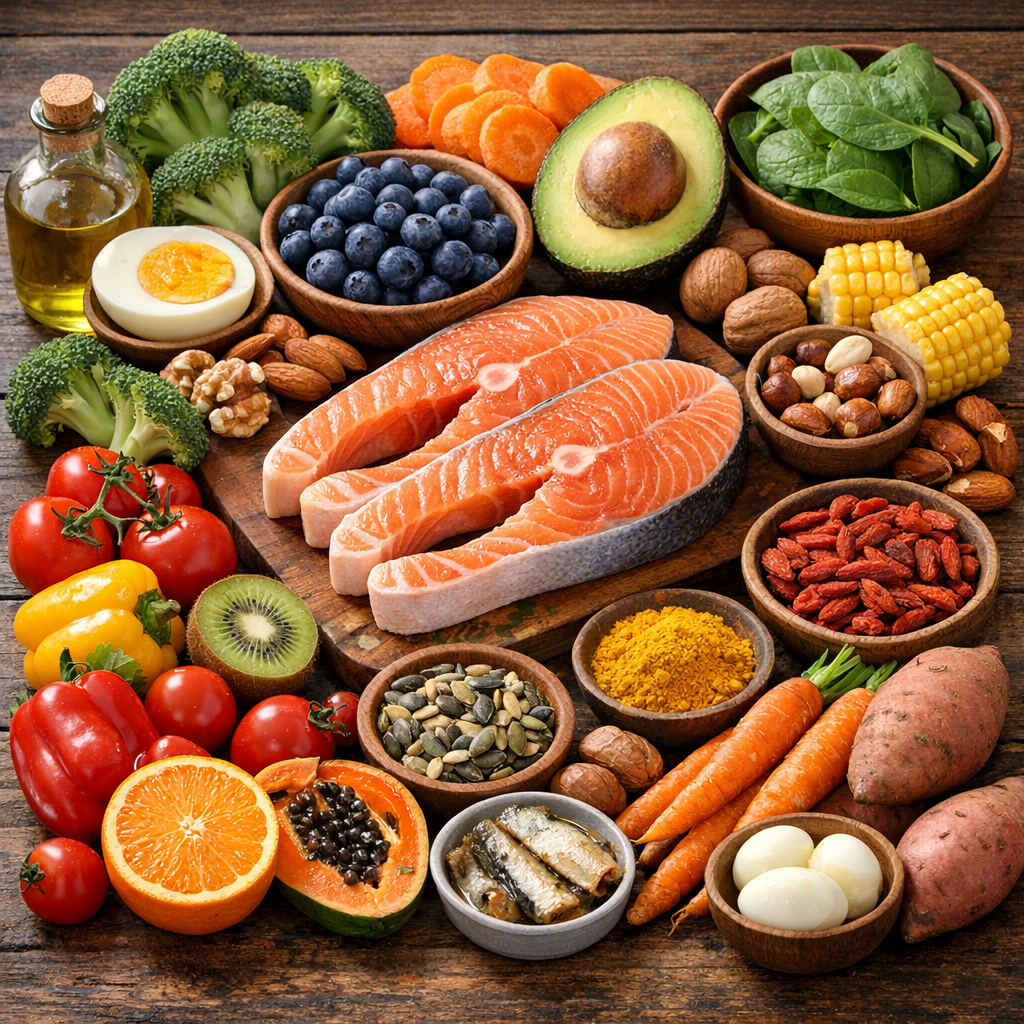
Clear vision starts before you pick up a pair of glasses. What you eat each day helps shape how your eyes work. It also affects your whole body, including your heart, bones, and brain.
So what should you focus on? The short answer is simple. Choose foods that support your eye lens, retina, and tear film. Drink enough water. Keep your plate balanced. And when should you get help from a pro? If you notice changes in your vision, or you have risk factors for eye disease, book an eye exam.
The Core Nutrients for Eye Health
Think of your eyes like a camera. The retina acts like the film, and the lens helps focus light. These parts need the right nutrients to stay strong and work well over time. They also need protection from normal cell stress caused by light and ageing.
Antioxidants (Vitamins C and E)
What do antioxidants do for your eyes? They help defend against oxidative stress, which can build up as you age. Your retina, including the macula area, is sensitive to this stress.
Why do vitamins C and E matter? Vitamin C and vitamin E help protect eye cells. They may also support healthy ageing in the eye.
Where can you find them? Try foods like:
- Citrus fruits
- Berries
- Nuts
- Seeds
Zinc
Which nutrient helps your eyes use vitamin A? Zinc does. It helps move vitamin A from the liver to the retina. Zinc also supports melanin, a pigment that helps protect your eyes from harmful light.
What foods give you zinc? Beans, whole grains, sweet potatoes, and shellfish are good options.
Vitamin A
What is vitamin A good for? It supports vision by helping the cornea and eye surface work well. It also helps make rhodopsin, a pigment your eyes need for low-light vision.
Where do you get vitamin A? Carrots are a classic choice. Leafy greens, sweet potatoes, and apricots also help.
Lutein and Zeaxanthin (Carotenoids)
How do lutein and zeaxanthin protect your eyes? They act like natural “sunglasses” inside the eye. These carotenoids build up in the macula and help filter blue light.
They also support macular health and may lower the risk for age-related eye problems.
Which foods are rich in these nutrients? Spinach, kale, and egg yolks. If you want an easy win, add a leafy side to lunch or dinner.
Omega-3 Fatty Acids (Especially DHA)
What about fats for eye health? The right ones matter. DHA is a key building block for retinal cells. Omega-3s also support tear quality, which can help with dry, tired eyes.
Where do you find DHA? Fatty fish like salmon, sardines, and mackerel are strong choices. If you do not eat fish, plant options can help too. Flaxseed, chia seeds, and walnuts contain ALA, which your body can convert to DHA in smaller amounts.
Beyond Specific Nutrients: Hydration and Dietary Balance
You can have the right vitamins and still feel eye strain. Why? Your tear film matters. It needs steady hydration and healthy oils.
Hydration
How does water help your eyes? Adequate hydration supports a stable tear film. That helps eyes stay more comfortable, especially if you spend time on a screen or in dry air.
What is a simple goal? Drink water throughout the day and watch how your eyes feel. If you often wake up with dry eyes, you may need to drink more or discuss dry eye care with an eye doctor.
Dietary balance
Do sugar and ultra-processed food affect eye health? It can. Diets high in added sugars and processed foods can raise inflammation in the body over time. Lowering these foods helps you support overall eye health.
If you want an easy “plate approach,” use this idea. Aim for:
- Leafy greens and colourful vegetables
- Whole grains (when you choose grains)
- Lean proteins
- Healthy fats
- A mix of fruits and vegetables
Which foods are best? The ones you can eat often. A small change you stick with beats a perfect plan you never follow.
The Bigger Picture: Food Helps, But Care Matters Too
Nutrition is a helpful tool. It supports your eyes and your whole body. Still, it does not replace medical care.
When should you see a professional? If you notice blurred vision, new floaters, flashes of light, pain, or sudden changes, contact an eye care provider right away.
Who should be extra careful? People with a family history of eye disease, people with diabetes, and older adults. These groups should not wait to ask for help.
If you are wondering, “What if I eat well but my vision changes?” That is a good question. Food supports eye health, but eye exams check for issues you cannot feel at home.
Practical Tips for Daily Eye-Healthy Eating
You do not need a long shopping list or fancy recipes. You just need a few habits you can repeat.
- Make leafy greens a daily staple. Spinach, kale, and collards add lutein and zeaxanthin.
- Eat fatty fish twice a week. Salmon, sardines, or mackerel can support DHA. If you do not eat fish, choose ground flaxseed, chia seeds, and walnuts.
- Pair vitamin C with vitamin E. Try citrus or berries with nuts or seeds. This combo supports antioxidant work.
- Add eggs to meals. Egg yolks can boost lutein and zeaxanthin in a simple way.
- Choose a colour at every meal. Aim for a mix of red, orange, green, and purple produce. Different colours bring different micronutrients.
- Use olive oil and other healthy fats. They help nutrient absorption and support lower inflammation.
Here is a quick example. For breakfast, have eggs with spinach. For lunch, try a salad with olive oil dressing and berries on the side. For dinner, choose salmon with roasted sweet potatoes. Small steps like these build up over time.
Supplements and Professional Guidance
Do supplements help everyone? Not always. Many people can meet key needs through food. But some people may need extra support.
What are AREDS2-type supplements? They are products used for certain people at risk of or diagnosed with age-related macular degeneration (AMD). They may include lutein, zeaxanthin, and other antioxidants with zinc. A clinician decides if they fit your situation.
Who should be cautious? If you take medicines, have kidney issues, smoke, or have other health needs, talk with an optometrist or healthcare provider first. High-dose zinc and some antioxidant supplements can be unsafe for some people or may interact with certain drugs.
Most importantly, do not rely on supplements alone. A nutrient-rich diet stays the base plan for eye health.
Conclusion
Better vision starts with smart, steady food choices. When you prioritise leafy greens, omega-3 sources, antioxidant-rich fruits, nuts, and healthy fats, you support macular health, tear quality, and overall well-being.
Do the basics consistently. Eat a colourful diet. Drink enough water. And keep up with regular eye exams. If your vision changes, get checked. Your eyes deserve care, not guesswork.
If you are due for a check-up or want nutrition guidance that fits your needs, schedule a visit with your optometrist or a registered dietitian. A tailored plan can help you turn these tips into meals you actually enjoy.


