Introduction
AI now shows up in almost every field. It can write, draw, and make music. It can also speed up work that used to take weeks.
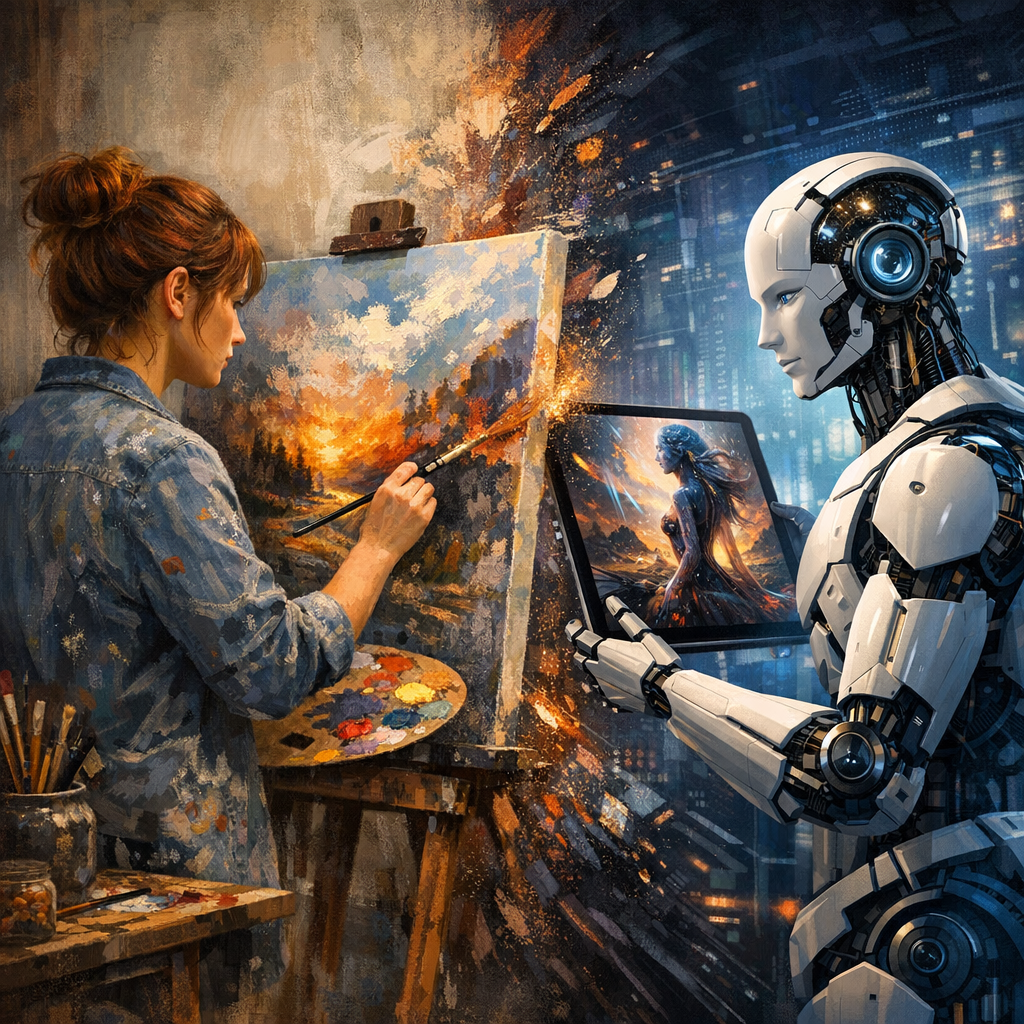
So what is the real question? Can AI replace the human traits that give art its soul?
AI can copy style and produce neat results. But art is more than output. It is what a person feels, learns, and shares. It is empathy, lived experience, and honest emotion.
In a world full of fast content, handmade art and real voices still matter. They help people feel something they cannot get from a machine.
The core idea: AI can help, but it cannot replace you
Have you noticed how quickly tastes change? One year, people want one thing, and the next year they want something else. Food, fashion, and even art trends shift fast.
What drives that change? More info, more tools, and more ways to share. Technology keeps growing, and many of us depend on it more each year.
That creates worry. Artists fear their work could be copied without real care. Performers worry about the mimicry of their mannerisms. And creators wonder what happens when AI can make something that looks close to the real thing.
Here is a simple truth. When people slow down and put effort into craft, art starts to feel alive. When work is rushed by a tool, it can feel flat.
What can machines not replicate?
Let’s ask a clear question: What is the one thing that human hands can make that AI cannot?
It is the care behind the work. It is patience. It is love. It is the small choices a person makes while learning, failing, and trying again.
Sure, a ready-made item can look like a home-cooked dish. It may use similar ingredients. It may even taste close at first bite.
But what is different? Everything that went into making it. A real meal has timing, heat control, and tiny edits based on smell. A real dish carries the maker’s mood and focus.
AI works from patterns. It moves fast, based on prompts you give it. A human creates from the inside out, guided by feeling and memory.
So the gap is not just speed. The gap is soul.
What does technology give us, and what does it take away?
Technology can save time. It can help you reach goals faster. It can also help you organise and improve quality.
But what price do we pay when we lean on it too much?
Here are a few common effects:
- Attention spans shrink. We jump from one idea to the next without sitting with any of them.
- Patience fades. We want quick results, even when craft needs time.
- Meaning gets skipped. Some art only becomes deep after you live with it.
AI can help you sketch ideas. It can suggest lines and make drafts. But it lacks emotion. It also lacks common sense in the human way. It does not know what it feels like to be you.
So use tools with care. Let them illuminate your work, not take control of it.
A lesson from advertising: why simple truth wins
Think about advertising. Some of the best ads feel warm, local, and real. They do not sound like they were made for everyone. They sound like they were made by a person who listened.
One lesson shows up again and again. What makes people trust a message? Genuineness.
In the past, a legendary ad mind proved that simple and honest can hit hard. Instead of copying big trends, the work used local charm, real language, and real emotion. It came from a humble background, not a hollow script.
Could an AI tool make that kind of brilliance? It might mimic the surface. But the magic came from listening to clients, using lived experience, and sharing a view only a real person could offer.
Why AI-made stories can feel hollow
In film and TV, AI is being used more. It can help write scenes or speed up drafts. Yet many AI-made outputs feel off.
Why? Here is the key: AI can imitate the past, but it cannot predict the future the way humans do.
Real storytelling relies on what happens when a writer is surprised. It needs tension. It needs doubt. It needs a turn you did not plan, then you lean into it.
What makes a story feel true?
It has rhythm. It has depth. It has character. It also has a risk. Humans bring surprise, contradiction, intuition, and lived feeling.
So, what should you do if you use AI for writing? Use it as a tool. Do not let it steer your voice. Keep your own thoughts in the lead.
A simple truth from physical practice
Listen to what happens in gyms and studios. People love to show off. They post advanced poses. They share high flexibility.
But what do they often skip? The breath. The inner pull. The calm focus.
That is a human detail. An AI can guide movements in theory. Still, real benefits come from doing it with the right attitude. A good human teacher adds years of hands-on know-how.
In many old practices, every teacher adds something new, based on their own growth. That keeps the art alive.
Who is a modern creator loved for?
People do not only love creators for speed. They love them for a voice they can recognise.
That leads to a sharp question: Which part of your art can AI not download? Your style. Your perspective. Your emotional signature.
Voice is not a button. It cannot be prompted into existence. It comes from how you see life, what you notice, and what you refuse to fake.
What about performance? A filmmaker once pointed to a key truth. AI cannot mirror the full range of human emotion. It also cannot copy the subtle eye connection that makes a scene land.
That is the part audiences feel right away. Even if they cannot name it, they sense the difference.
A quiet manifesto for creators
Let’s make this practical. If you create, ask yourself these questions, then answer them with action.
1) What should you do first?
Let creativity flow. Do not wait for permission. Make small work often.
2) Where do breakthroughs come from?
<p
3) How should you use AI?
Use it to light your next step. Let it help with drafts and ideas. Do not let it force your final view.
4) What should you do in real life?
Engage with life directly. Do not only photograph or document. Live the moment. Then your work has weight.
5) Who should you share with?
Share your ideas freely. Do not build your art around fear of judgment.
The heart of the message
AI can be useful. Tools can speed up drafts, help you test ideas, and reduce busy work.
But the part of you that feels, imagines, listens, and lives is the part the world needs most. Machines do not have that.
So what should you choose?
Use tools wisely. Keep your voice central. Protect the human side of your craft.
Why this matters for a Western reader
You do not need a special culture to feel the difference between human and machine work.
Ask yourself: What feels more real, a meal made with care or one made with mass output? People sense it.
Which song hits deeper, one made from real heartbreak or one made just to match a prompt? Most people choose the first.
People also notice when a creator cares. They notice when work carries a point of view. They notice when something was made by a person who meant it.
So here is the good news. AI does not kill creativity. It can make human art rarer. When content gets flooded with machine-made output, authenticity becomes a new kind of premium.
And that means you should create anyway. Create especially. Create as the one thing machines cannot do.
Practical guidelines for creators today
- Build a personal voice. Keep working on style, tone, and point of view.
- Use AI thoughtfully. Treat it like a partner for ideas, not a replacement for your judgment.
- Document your process. Share the human choices that shaped the final piece.
- Focus on authentic storytelling. Ground your work in real emotion and real curiosity.
- Act ethically. Seek consent when possible, credit people, and be clear about AI use.
- Stay curious and self-aware. Check how tools change your habits and your audience response.
Conclusion
AI can move fast and expand options. Still, the core of art stays human. It lives in empathy. It grows from lived experience. It shows up as honest emotion.
The most compelling work comes from people who listen deeply, live fully, and share with care. In an AI world, that is not just a nice idea. It is your edge.
Optional call to action
What is your take on AI and creativity? Share a work you felt was truly human. Also, tell us how you balance AI tools with your own voice. If you create with AI, what helps your output feel real and resonant?