
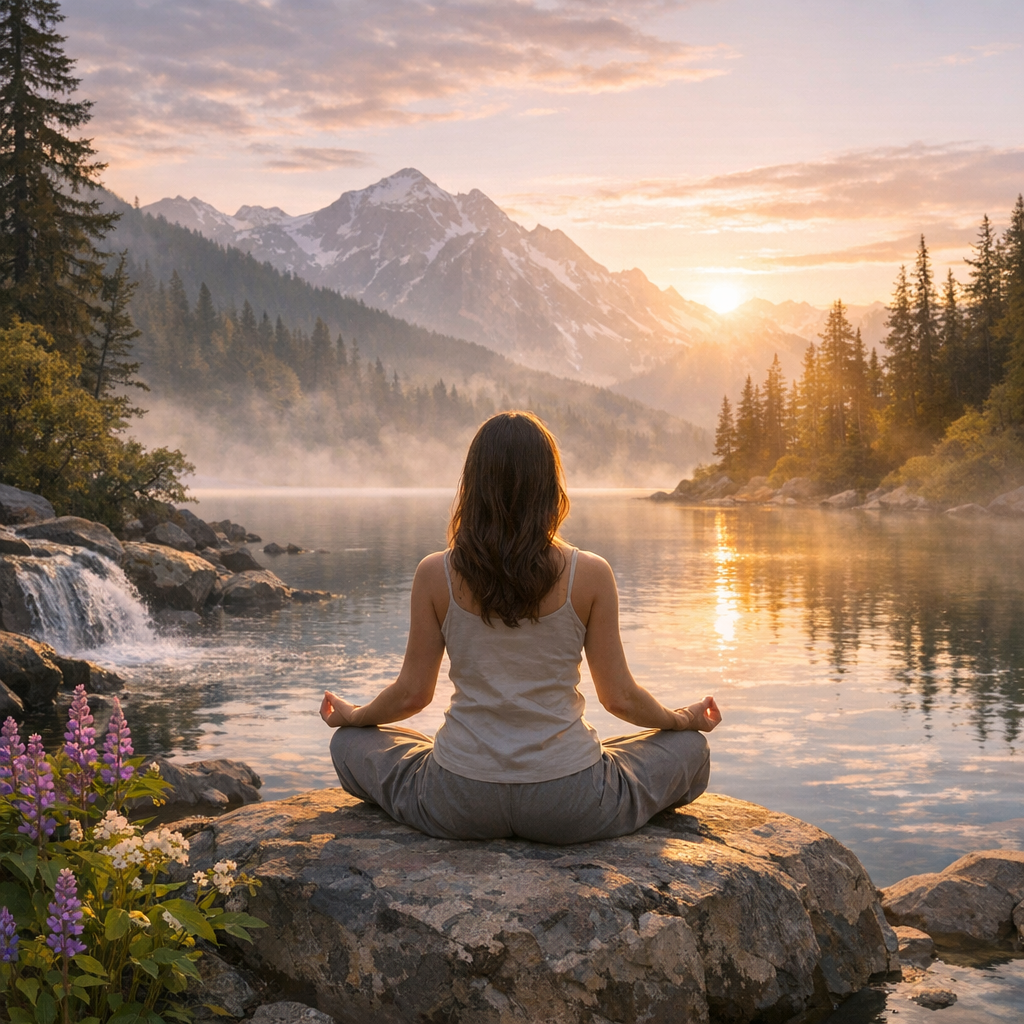
Peace is not something you lock in once and keep forever. It is more like a skill you practice. You return to it when life gets loud. You notice it again when your mind tries to run off.
This guide turns the core ideas from Chasing Peace into plain, everyday steps. You will also see how modern mindfulness helps people handle stress and worry in real life.
The opening moment everyone knows
Think about a calm moment you have had. Maybe you finished a short meditation. Maybe you took a slow walk. Maybe you did yoga. Or you just sat with a quiet morning coffee.
Your breath feels steady. Your body feels loose. Your mind feels still, even if only for a bit.
Then you stand up. You check your phone. A new message pops up. A task calls your name. Worry shows up, like it owns your attention.
So what gives? Why does peace slip away so fast?
What is the real question here?
What should you ask yourself when peace fades? Ask this: if inner practice brings peace, why does it not stay all day?
That question helps you move from wishful thinking to a clear understanding.
Peace was never meant to be permanent
Inner practice is not about escaping life. It is about seeing life more clearly.
So the real promise is not, “Do this once and be peaceful forever.” The honest message is, “Repeat, remember, and return.”
Peace is not a place you reach. It is a place you keep coming back to.
Which part of you returns?
Which part of you comes back when you practice? It is the part that notices.
When you pause, you start to feel the gap between a thought and your next move. That gap is where calm lives.
The three sources of difficulty
Why is it so hard to stay peaceful all the time? Because difficulty comes from three places.
- Things inside you: your body, your thoughts, and your emotions
- Things from other people: conflict, criticism, disappointment, and loss
- Things around you: events, plans that change, nature, and the unexpected
When you sit quietly and wish for peace, you might think, “I want life to be perfect.” But peace practice asks for something else.
You are asking to meet what comes, with more balance. That balance brings strength. It also brings hope.
What kind of balance matters most?
What balance helps you most? The kind that lets you feel things without getting pulled under. You can care and still stay steady.
Pain is not in the thing; it is in the attachment
Here is a simple way to see it.
Imagine a stone in front of you. Now imagine a teddy bear you love, sitting there too. If you drop the stone, you feel nothing. If you drop the teddy bear, you feel a shift.
The teddy bear is not heavier. It is not more fragile. The difference is your connection.
Pain does not live in the object. Pain often comes from how tied you feel to it.
When you cling to an outcome, a role, an image of yourself, or an opinion, life has more chances to hit that spot. You may not choose those attachments, but you can learn to notice them.
Who gets hurt most when you cling?
Who feels the hurt first? Usually, you do, in your mind and body. The moment you identify with something, it becomes personal. Then the loss feels bigger.
This does not mean you should stop caring. It means you care with less grip.
There is something in you that does not shake
One key idea in this teaching is simple. Inside you, there is a steady part.
This is not magic. It is not just for gurus. It is the quiet witness inside you. The part that has watched your life, your thoughts, your feelings, and your reactions.
It has been there since you were young. You do not need to create it. You just need to remember it.
When you forget it, you suffer more. Why? Because you start to believe you are only your thoughts and moods.
But you are not your thoughts. You are the one who notices them.
What does “watcher” mean in daily life?
What does it mean to be the watcher? It means you can notice, “I am having a worry thought.” You can notice, “I feel tense.” Then you can choose your next step, instead of acting on the first impulse.
The sky and the clouds metaphor
Picture the sky on a changing day. Clouds form. Clouds move. A storm may come. Then it clears.
The sky stays the same. The clouds do not.
Your thoughts are like clouds. Your emotions are like clouds. Even pain can feel like a cloud that rises, changes, and passes.
Now ask one question that shifts everything: are you the cloud, or are you the sky watching the cloud?
You are the sky.
That knowing brings hope, because clouds do not last.
Pain will come, but unnecessary suffering does not have to
Pain is part of life. That part is real.
But suffering is often the extra layer you add. You add it with your resistance. You add it with your stories. You add it with your self image.
This is not denial. This is wisdom.
Try a small test. Can you stop thinking all at once? No. Thoughts will keep coming.
But can you notice a thought without reacting right away? Yes.
That is the heart of practice. Notice a thought without jumping into it.
When can you do this?
When does it work best? Right when you feel the pull. When you notice you are about to snap, spiral, or shut down, that is your moment.
Why is peace fading, not failure
If peace slips away, it does not mean you failed. It means life reached you.
The point of inner practice is not to escape life. It is to meet life with awareness. Awareness is the quiet, watching part of you. That awareness is peace, even if your day feels messy.
What should you do when peace disappears?
What should you do? Return.
Return to your breath. Return to the present moment. Return to the watcher. Each time you return, you train your mind.
One reflection to carry with you
What changes is not you.
What changes are the content, thoughts, feelings, and moods? The one who watches change stays.
That observer is you.
Modern mindfulness support (in plain words)
These ideas match what many mindfulness programs teach today.
Training attention helps you notice thoughts and feelings without harsh judgment. That can lower reactivity. It can also support better emotional balance.
Mindfulness is used in many settings to reduce rumination, stress, and worry. In simple terms, it helps you stop getting stuck in loops.
The sky and clouds idea also maps well to how the mind works. Mental events rise and pass. The sense of self that watches tends to feel steadier when you practice.
Short, regular practice matters too. A few minutes each day can improve mood and daily function over time.
What is a practical takeaway for today?
When you notice you are pulled into a reaction, widen your attention. Feel the space behind the reaction. Then choose a response that is calm and kind.
You do not have to react fast. You can react well.
A quick practice you can try right now
After a moment of quiet, invite your mind to observe a thought like a cloud drifting by. Notice it without clinging. Notice it without judging. Then gently redirect your attention back to the present moment.
Repeat as needed throughout the day. That is how peace becomes a habit of returning.
Final thoughts
Returning to inner peace is not a one-time win. It is a pattern. You return to the observer in you. You return to balance when life shifts. You return to the truth that you are not your thoughts, you are the one who watches them.
And as long as you can return, hope stays with you.


