Introduction
As we get older, life can look different day to day. Kids may live far away. Friends may move. Health changes can shift routines. Even small things, like where you shop or who you see at the same time each week, can change.
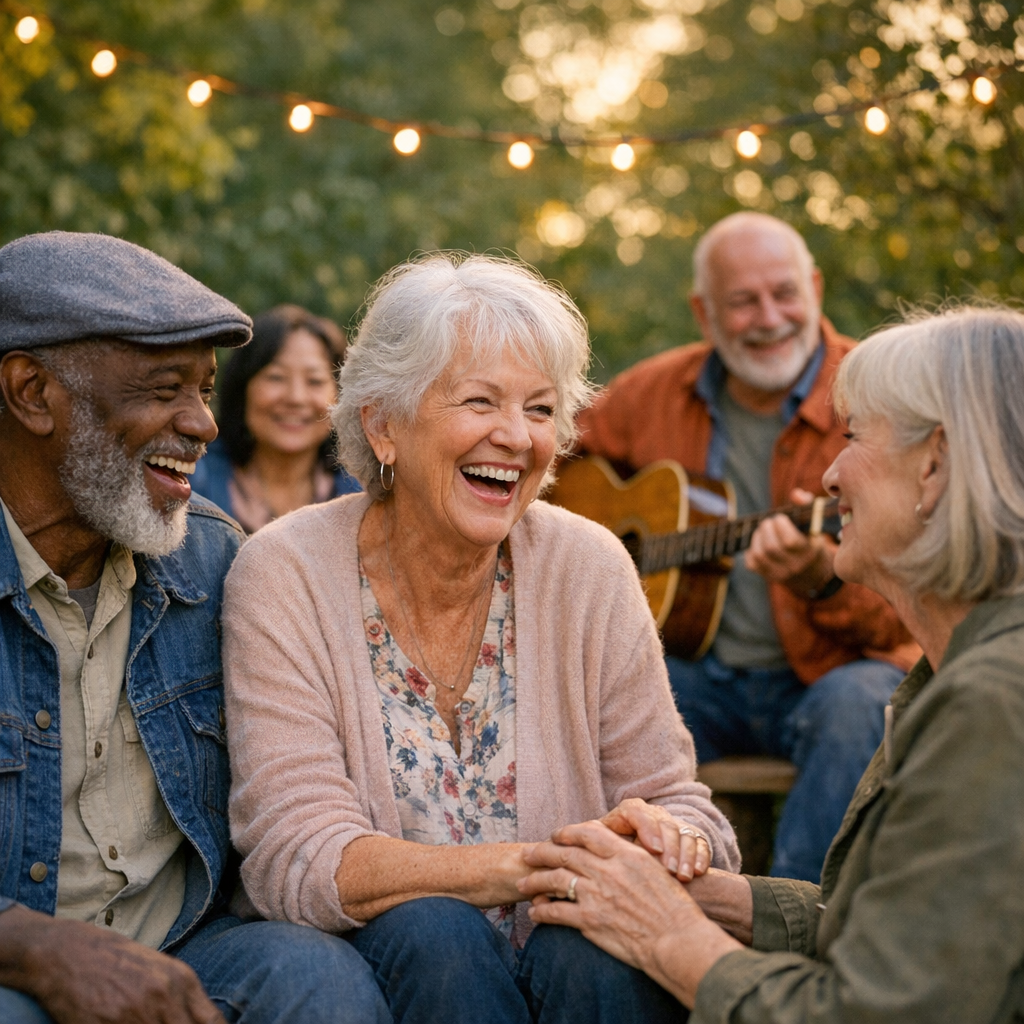
So what stays important when life changes? Community does. People are built for connection. When you have meaningful relationships, you get comfort, a sense of belonging, and real help when life gets hard.
In this post, we will look at why community matters more with age, what research says about social connection, two true-to-life stories about grief, and simple ways to grow supportive ties. You do not need a big plan. You just need a first step.
The core premise: connection supports your mind and heart
What changes as we age? Often, distances get bigger and social circles get smaller. Life transitions stack up. One move, one loss, one change in health, and suddenly your usual people and places feel farther away.
Yet the need for belonging does not shrink. In fact, connection often becomes even more important. When you have relationships that feel safe and steady, you are more likely to handle stress well.
Here is what the community gives you, in plain terms:
- Encouragement when you feel worn down
- Belonging so you do not feel alone
- Practical support when you need help with daily life
- A company that makes hard days easier to get through
And that matters most during loss, change, and uncertainty. What happens when those seasons show up? You want someone to call. You want a familiar face. You want to feel known.
Why does it matters more with age
Why does social connection weigh more as we get older? One reason is simple. Mental health is linked to whether you have meaningful relationships. When those ties are strong, stress feels more manageable.
Another reason is that life can leave you with fewer safety nets. When you lose one friend, one group, or one routine, it can take longer to find new support. So the connection you do have starts to carry more weight.
So what does the community do during grief and uncertainty? It helps you stay in life instead of shrinking away from it. It gives you routines, spaces, and people who remind you that you still belong.
Two contrasting stories: connected grief vs isolated grief
Story 1: the power of a connected life
One woman stayed active in a faith community, joined a local group, and kept lifelong friendships. When her husband died, her network was already there. Friends checked in. People invited her out. She did not have to explain her grief over and over. She could just show up.
Her grief was real and ongoing. But she did not carry it alone. The community helped carry the weight. She had places to go, people to talk to, and a steady sense of being part of something bigger than the loss.
What changed for her? The loss did not vanish. But her life still had warmth in it, and that made a difference.
Story 2: isolation magnifies grief
Another woman had not joined outside groups before her loss. She mostly stayed to herself. After her husband died, she expected to cope on her own. Soon she felt cut off from daily life.
Without regular contact, isolation grew. She withdrew more. Days turned quiet. The lack of community did not create grief, but it made grief heavier.
What is the lesson here? Community does not erase loss. It changes how you carry it.
What the evidence shows about social isolation
What does research say about older adults and social connection? Studies link social isolation to higher risks of depression, anxiety, cognitive decline, and physical health issues.
It also shows that long stretches of disconnection can affect more than feelings. It can affect how people function day to day and how well they manage stress.
Meaningful relationships act as a protective factor. You do not need ten groups. You need a few ties that feel real and helpful. Which kinds of connections can work?
- Faith or spiritual groups
- Volunteer organizations
- Hobby clubs or interest groups
- Regular social routines, like a weekly coffee or a standing phone call
When you ask, “Where do I start?” the answer is often closer than you think. A single routine can become a steady bridge back to the community.
Community does not have to be big or complicated
Here is a key idea to hold onto: community does not need to be fancy, and it does not have to be large. It often starts with simple commitments to presence.
What does that look like in real life? It can look like:
- A weekly coffee with one person
- A standing phone call every other week
- A familiar face at a regular gathering
- One volunteer task each month
When you show up again and again, something builds. Trust grows. Conversations get easier. You stop feeling like a visitor and start feeling like you belong.
Think about it like watering a plant. You do not flood it once and hope for the best. You give steady care. Relationships grow the same way.
The deeper lesson: community changes the weight of loss
People often ask, “Can community prevent grief?” Loss is part of life, so no. Community cannot stop death, illness, or hard change.
But community can change how you carry loss. It can help you feel seen and valued. It can bring encouragement, compassion, and companionship when you need it most.
Who benefits from community? You do. Your family benefits too. When older adults stay connected, routines feel steadier, and support becomes easier to share.
Where can this connection grow? It can grow in faith groups, neighbourhood circles, hobby spaces, school events, volunteer teams, and even in small moments like a daily check-in.
Updated insights for ageing and community
Today, public health groups talk more about loneliness and social connection. Many programs now treat connection as part of healthy ageing, not just a nice extra.
What is changing in practice? More communities are using social prescribing. That means a person can be linked to local groups and support that fit their interests and needs.
Also, technology is playing a role. For some older adults, easier access to phones, tablets, and simple online tools can help them stay in touch with family and friends. Training matters too. When someone knows how to use a device, connection becomes easier, even with distance.
Intergenerational programs are another bright spot. When older adults spend time with kids or teens in safe, structured ways, many people report better mood, more purpose, and more social time.
What about the body? Safe outdoor spaces and gentle movement in group settings can support both mental and physical health. A walk with others can turn exercise into connection.
Communities and families are also learning to reduce barriers. They can check in for loneliness risk, offer flexible entry points, and keep contact predictable, even if it is brief.
Simple ways to strengthen your circle this week
If you feel like your circle is thin, start small. You do not need to join everything at once. You need one or two actions that you can keep.
What is a good first move? Pick something you can repeat.
- Choose a small routine: schedule a weekly coffee, a short walk, or a standing call.
- Pick one place to return to: a library event, a class, a group meal, or a volunteer shift.
- Ask one clear question: “Who else should I meet?” or “Can you introduce me to your group?”
- Reach out with a low-pressure note: “Thinking of you. Want to chat this week?”
- Use tech if it helps: send a message, share a photo, or join a group call.
Which step feels most doable right now? Do that one first. Consistency builds trust, and trust builds community.
Conclusion
Community is a core pillar of well-being as we age. Loss and change are part of life, and they will still happen. But deliberate, simple acts of presence can make a real difference.
Show up for a regular coffee. Make a steady phone check-in. Say yes to a familiar invitation. When you nurture supportive networks, you gain more than company. You gain purpose, belonging, and mutual care.
And the best part is this. You do not have to start big. A small step today can become the connection you lean on tomorrow.
Optional next step: Reach out to a neighbor, friend, or local community group. Plan one simple connection for this week. If you want, share this with someone who might benefit, and tell us the one concrete step you will take to strengthen your circle.